
A dua for peaceful sleep is the best way to end a restless day. Everyone knows the feeling: the body is exhausted, but the mind refuses to rest. Thoughts race, worries replay, and the hours of the night slip away while sleep stays just out of reach. If restless nights are stealing your peace, know that Islam offers something deeper than any sleep remedy — duas that calm the heart at its root, because true rest begins not in the body, but in the soul’s trust in Allah.
The Prophet Muhammad ﷺ gave special supplications for those troubled at night — for anxiety, nightmares, and the inability to sleep. These duas do not merely ask for sleep; they address the fear and restlessness underneath sleeplessness, replacing them with the remembrance of the One who never sleeps. In this article, you will find the Sunnah duas for peaceful sleep, beautiful dreams, and calm nights, along with practical guidance for the restless-hearted.
Why Restlessness Steals Our Sleep
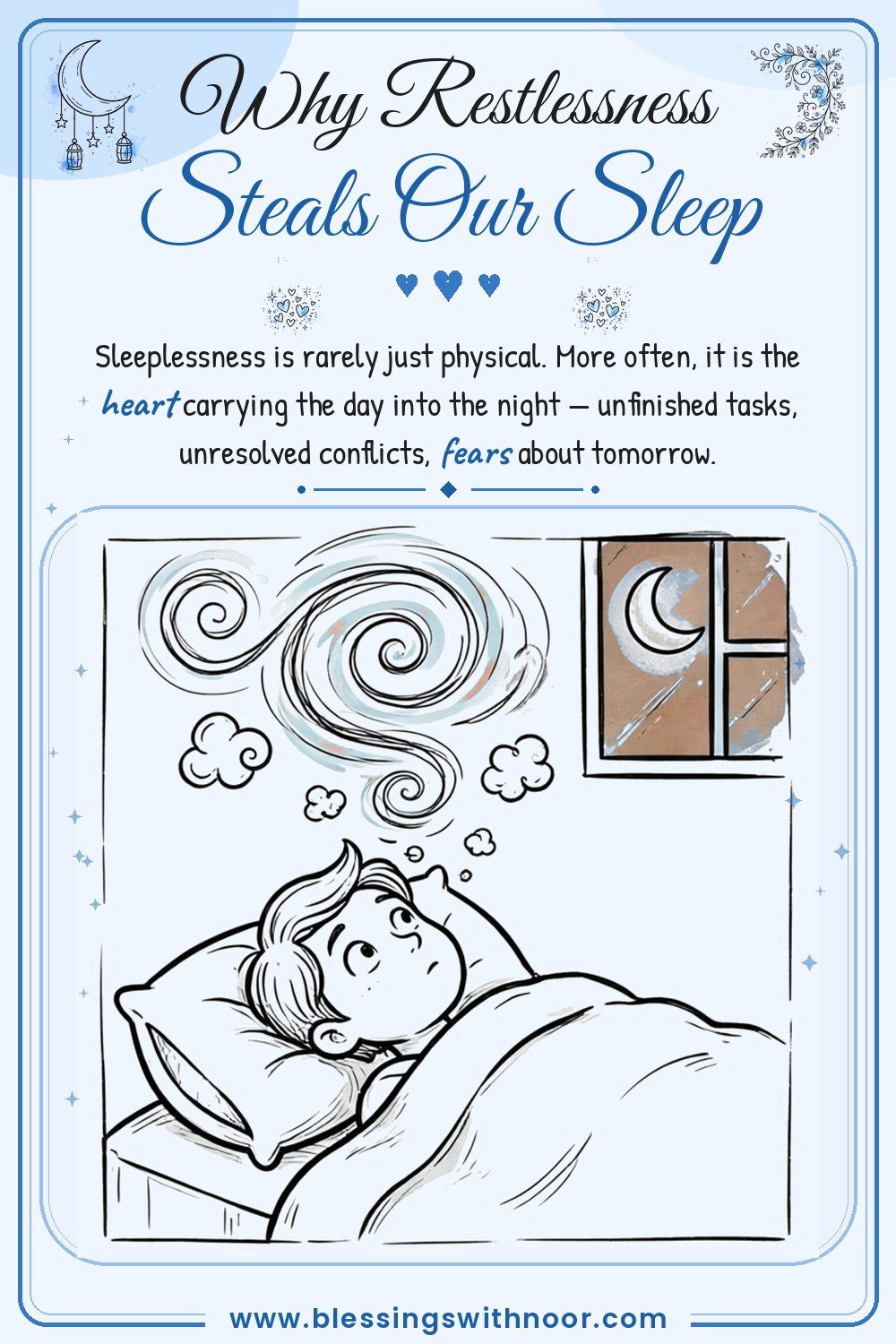
Sleeplessness is rarely just physical. More often, it is the heart carrying the day into the night — unfinished tasks, unresolved conflicts, fears about tomorrow. The Quran gives us the diagnosis and the cure in one verse: hearts find rest only in the remembrance of Allah (Quran 13:28). When the heart is disconnected from its Creator, it searches for rest in all the wrong places: in overthinking, in screens, in worry. But the heart was made for dhikr the way the body was made for sleep — deprive it, and nothing else will satisfy.
The beautiful news is that turning to Allah at night actually works. The rhythmic remembrance of the bedtime duas slows the racing mind; the act of handing your worries to Allah releases the grip of anxiety; and the certainty that “with hardship comes ease” (Quran 94:6) reframes tomorrow’s fears. Sleep, in Islam, is an act of trust — and trust is the deepest sedative of all.
What to Do on the Nights When Worry Has a Specific Name
The duas on this page help every restless night, but some nights are not generally restless — they are restless for one clear reason, and naming that reason in your dua changes how you pray and how your heart settles.
On a night of grief, for example, your mind is not racing with tasks; it is returning, again and again, to a face, a voice, an empty place in the house. On such nights, do not force yourself to “stop thinking.” Instead, turn the memory itself into a dua: ask Allah to have mercy on the one you miss, to reward them, and to let your love for them become sadaqah and prayer rather than only pain. Many people find they finally sleep after they have wept and prayed honestly, instead of lying awake trying not to feel anything.
On a night before a test, an interview, a scan result, or a difficult conversation, the fear is about tomorrow. The Sunnah habit that helps most here is to finish tomorrow’s preparation before bed — clothes laid out, bag packed, alarm set — and then, in your dua, deliberately close the file. Say to Allah, in your own words, that you have done what you can and the outcome now belongs to Him. The body often refuses to rest while it believes a task is still open; giving the task a clear end, and the worry a clear Owner, is sometimes the missing step.
On nights of guilt, sleep is disturbed for a different reason again. A harsh word, a missed prayer, a wrong you have not put right — the conscience keeps the heart awake. Islam does not ask you to drown that feeling; it asks you to answer it with tawbah. Make sincere istighfar in bed, resolve to apologise or repair what you can in the morning, and then trust the mercy of Allah, who loves to forgive. Falling asleep mid-istighfar, as the Sunnah habits section suggests, is one of the most peaceful ways a troubled heart can end its day.
And on nights when there is no reason at all — when you are simply wired, overtired, and frustrated with yourself for still being awake — be gentle with yourself. The Prophet ﷺ’s guidance for disturbed sleep was refuge, remembrance, and changing position, not self-anger. Dim your frustration the way you dim the lights. Repeat the dua for those troubled at night slowly, breathe out longer than you breathe in, and remember that even lying in bed remembering Allah is worship, whether sleep comes in five minutes or fifty.
Understanding your own night in this way does not replace the duas above; it helps you choose and mean them. A dua prayed with a named fear is a key cut for a particular lock — and the heart knows the difference.
For nights when a heavy conscience, rather than anxiety, steals your rest, our night dua for forgiveness and a calm heart speaks directly to that need.
The Prophet’s ﷺ Dua for Those Troubled at Night
There is a special dua the Prophet ﷺ taught for restlessness, anxiety, and disturbing dreams — prescribed precisely for nights when peace feels far away:
Arabic: أَعُوذُ بِكَلِمَاتِ اللَّهِ التَّامَّاتِ مِنْ غَضَبِهِ وَعِقَابِهِ وَشَرِّ عِبَادِهِ، وَمِنْ هَمَزَاتِ الشَّيَاطِينِ وَأَنْ يَحْضُرُونِ
Transliteration: A’udhu bikalimatillahit-tammati min ghadabihi wa ‘iqabihi, wa sharri ‘ibadihi, wa min hamazatish-shayatini wa an yahdurun.
Meaning: “I seek refuge in Allah’s perfect words from His anger and punishment, from the evil of His servants, from the whispers of devils, and from their presence around me.” The Prophet ﷺ taught this dua to a companion whose child was troubled at night, and it is a mercy for adults too. Say it slowly when anxiety rises in the dark, and feel each phrase build a wall of divine protection around your bed.

More Duas for Peaceful Sleep and Beautiful Dreams
1. The Three Quls: A Shield for the Sleeper
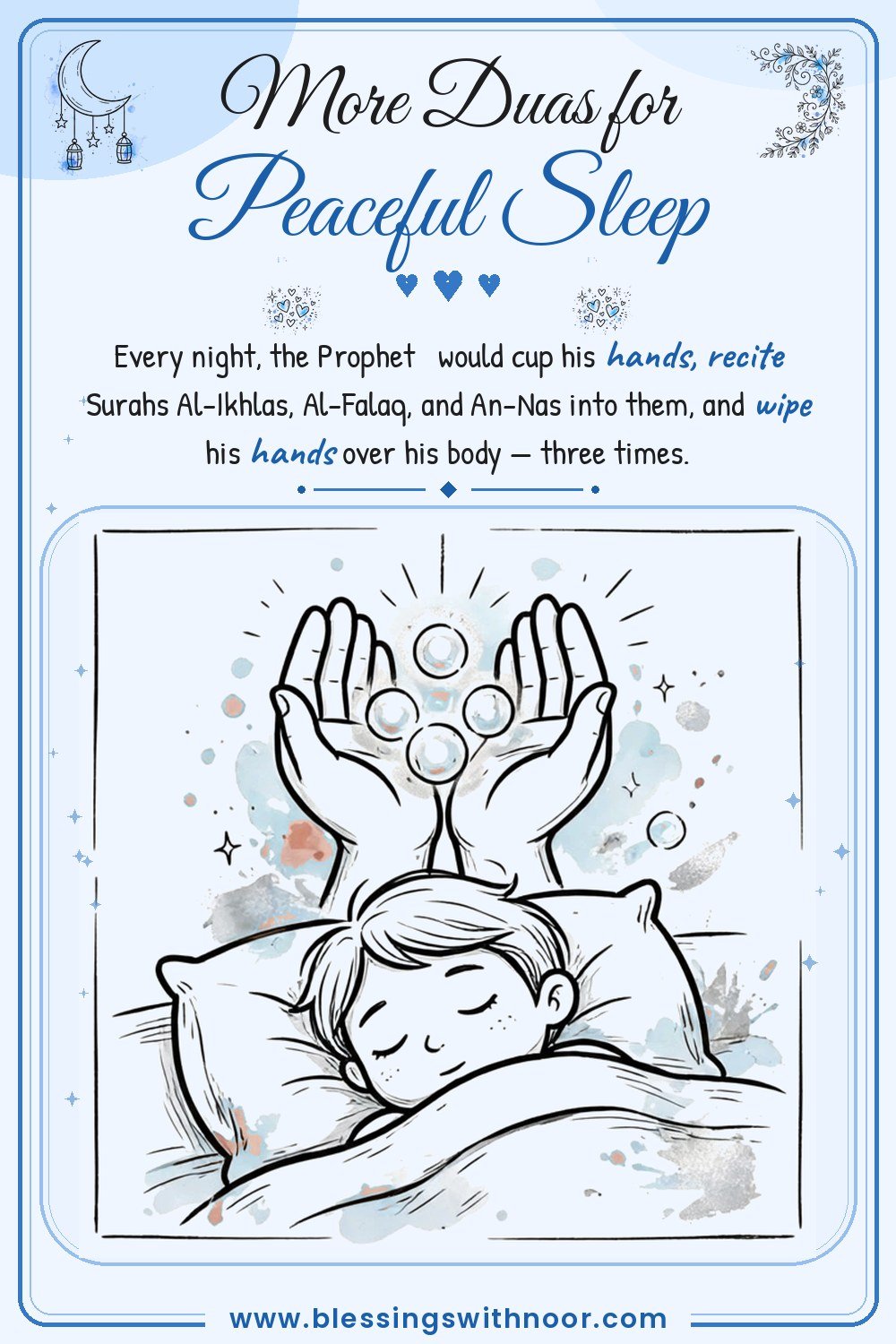
Every night, the Prophet ﷺ would cup his hands, recite Surahs Al-Ikhlas, Al-Falaq, and An-Nas into them, and wipe his hands over his body — three times. This practice covers the sleeper in divine protection from every direction: from envy, from darkness, from whispering evils, from nightmares. If you do nothing else on a restless night, do this. It takes two minutes and transforms the atmosphere of your room from anxious to serene.
2. Dua for Calm When Worry Keeps You Awake
Arabic: اللَّهُمَّ بِكَ وَضَعْتُ جَنْبِي، وَبِكَ أَرْفَعُهُ، فَإِنْ أَمْسَكْتَ نَفْسِي فَارْحَمْهَا، وَإِنْ أَرْسَلْتَهَا فَاحْفَظْهَا بِمَا تَحْفَظُ بِهِ عِبَادَكَ الصَّالِحِينَ
Transliteration: Allahumma bika wada’tu janbi, wa bika arfa’uhu, fa in amsakta nafsi farhamha, wa in arsaltaha fahfazha bima tahfazu bihi ‘ibadakas-salihin.
Meaning: “O Allah, in Your name I lie down and in Your name I rise. If You take my soul, have mercy on it; if You return it, protect it as You protect Your righteous servants.” When the mind spins with “what if,” this dua answers with “whatever happens, I am in His hands” — and that surrender is where sleep begins.
3. A Personal Dua for Sweet Dreams
In your own words, ask Allah for beautiful dreams: “O Allah, grant me peaceful sleep and dreams that comfort my heart. Keep nightmares and disturbing thoughts far from me, and let me wake refreshed and grateful.” The Prophet ﷺ taught that good dreams are glad tidings from Allah, while disturbing dreams are from Shaytan — and that seeking refuge and changing sleeping position dispels their effect. End your night by asking for the glad tidings.
For the full Sunnah bedtime routine, read our guide to Dua Before Sleeping, and explore more comfort in our Night Prayers collection.
If fear and a sense of vulnerability are what keep you awake, the protection offered in Ayat al-Kursi and duas for protection from evil deserves a slow read before bed.
Practical Sunnah Habits for Better Sleep
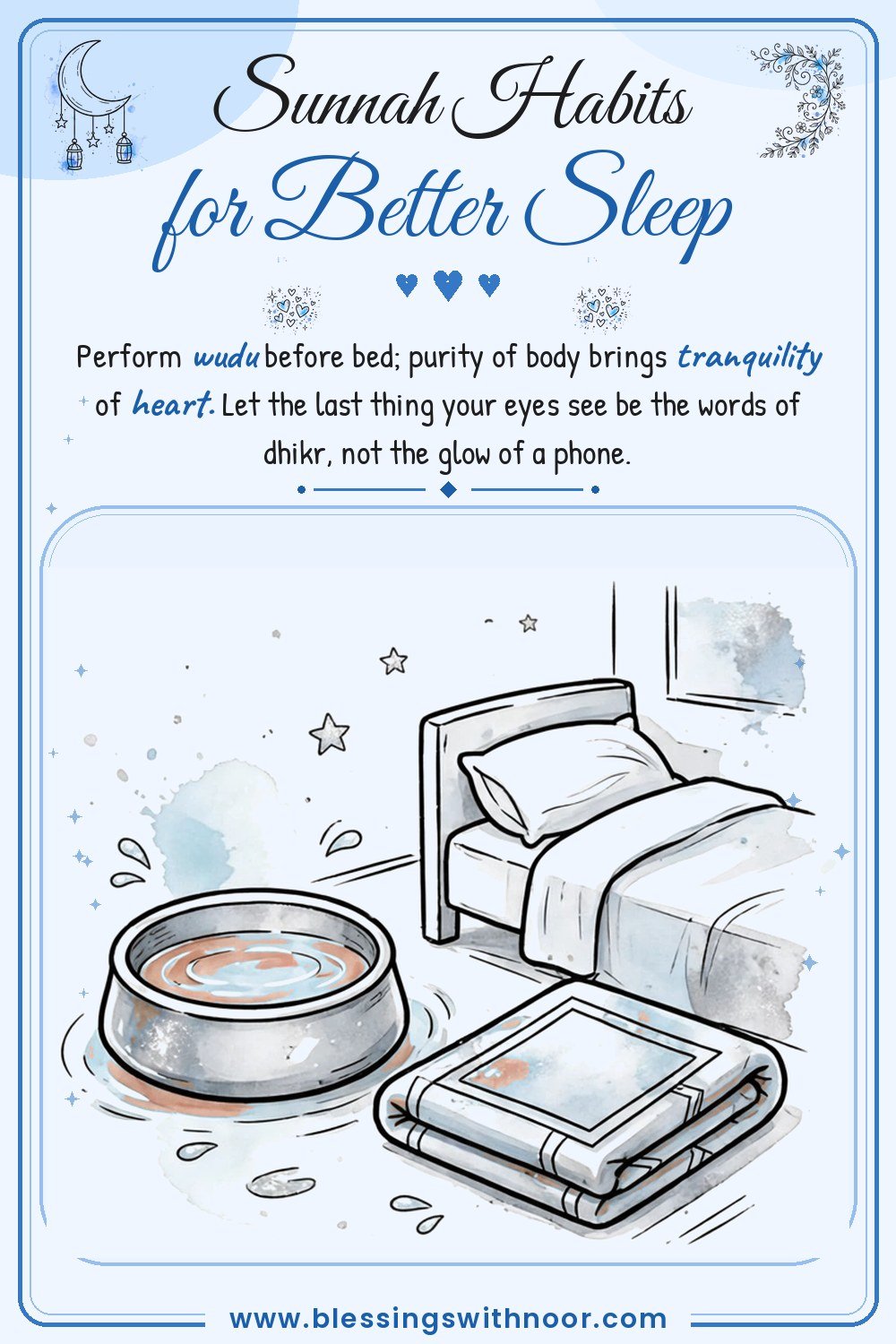
The Sunnah pairs spiritual remedies with practical wisdom. Sleep early — the Prophet ﷺ disliked staying up late without need, and early nights make for blessed mornings. Perform wudu before bed; purity of body brings tranquility of heart. Avoid heavy meals and stimulating screens late at night; instead, let the last thing your eyes see be the words of dhikr, not the glow of a phone. Keep your sleeping place clean and say bismillah as you lie down. If thoughts race, do not fight them — redirect them: begin counting your istighfar, “Astaghfirullah,” slowly, until the counting itself becomes a lullaby of remembrance. And if you wake in the night, resist the phone; whisper a dua instead, for the night hours are precious and even a moment of dhikr in them is beloved.
To learn the complete bedtime routine step by step, from wudu to the final dua, read our full guide to the dua before sleeping and the Sunnah night adhkar.
And to protect both ends of the day in the same way, explore the morning and evening adhkar for daily protection once your night routine feels settled.
For Parents: Calming Your Child’s Nights
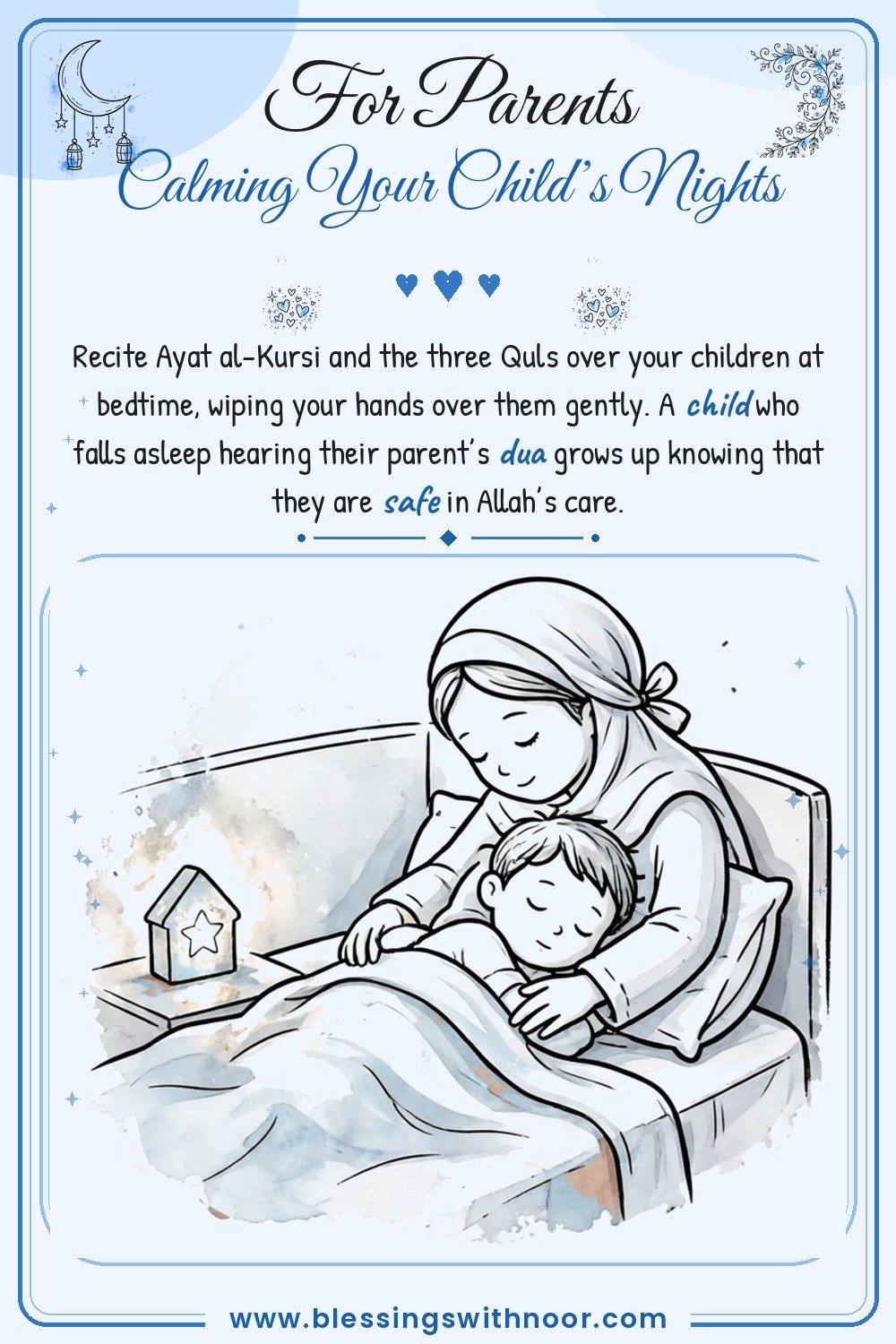
Children also suffer restless nights — bad dreams, fear of the dark, difficulty settling. The Sunnah gives parents a beautiful role: the Prophet ﷺ would seek Allah’s protection for his grandsons Hasan and Husayn with the words, “I seek refuge for you both in Allah’s perfect words from every devil, harmful creature, and evil eye.” Recite Ayat al-Kursi and the three Quls over your children at bedtime, wiping your hands over them gently. Teach them the short dua “Bismika Allahumma amutu wa ahya,” and end with a personal dua naming each child. A child who falls asleep hearing their parent’s dua grows up knowing, deep in their bones, that they are safe in Allah’s care. For more on guarding your little ones, see our article on Dua for Protection from the Evil Eye.
Building a Ten-Minute Night Routine Around These Duas
You do not need a long routine, and a long routine you abandon after three nights helps no one. Try building just ten calm minutes in the same order each night, so your body begins to expect sleep the way it expects Fajr after dawn.
Begin before your head touches the pillow: make wudu slowly, tidy anything in the room that will catch your eye and start a new train of thought, and put your phone to charge outside arm’s reach — ideally outside the room. Then, sitting on the edge of the bed, recite Ayat al-Kursi once and the three Quls into your cupped hands, wiping them over your body as the Prophet ﷺ did, three times. This physical action matters; your hands are doing something your scrolling thumb cannot do, and the repetition settles breathing on its own.
Once you lie down on your right side, say the short sleeping dua — “Bismika Allahumma amutu wa ahya” — and then the longer dua for calm from this page if worry is present tonight. End with three slow rounds of personal dua in your own language: one of thanks for today, one asking forgiveness, and one entrusting tomorrow to Allah. If you share a room or are putting a child to sleep, say that final part aloud and softly; being prayed over is a gift most people, young or old, never forget.
Many readers pair the duas on this page with our broader collection of good night duas and blessings when they want extra words for family members as well as themselves.
Frequently Asked Questions
What should I do after a nightmare?
Seek refuge in Allah from Shaytan, spit lightly to your left three times, and turn to the other side. Do not recount disturbing dreams to others — the Prophet ﷺ taught that this dispels their harm, and they will not hurt you.
Can dua really help with insomnia?
Dua addresses the spiritual roots of sleeplessness — anxiety, guilt, and disconnection — which are often the true culprits. Combine the Sunnah duas with healthy sleep habits, and consult a doctor if sleeplessness persists; Islam honors both spiritual and physical remedies.
Is there a dua specifically for falling asleep quickly?
The combination of wudu, the three Quls with wiping, Ayat al-Kursi, and slow istighfar is the Sunnah’s complete answer. Many find that one hundred “Astaghfirullah” brings sleep before the count is finished.
A Final Dua for Your Peaceful Night
Tonight, give your worries to the One who never sleeps, so that you can. O Allah, quiet my racing thoughts as You quiet the night. Replace my anxiety with trust, my restlessness with Your remembrance, and my fears with the certainty of Your mercy. Grant me deep, peaceful sleep and dreams that gladden my heart, and wake me in the morning light and grateful. May every night henceforth be a return to calm, and every morning a fresh beginning. Sleep well — you are in the best of hands.