
There is a stillness at dawn that exists at no other hour. The world is asleep, the sky is shifting from black to silver to gold, and in that quiet, the believers rise. Fajr is more than the first prayer of the day — it is a declaration. It says: before the world gets my attention, my Lord gets my heart. These fajr blessings — the duas, the remembrances, and the quiet moments after the dawn prayer — can transform not just your morning, but the entire direction of your day.
If you have ever wondered why some people seem to carry a special light with them, look at their mornings. The one who begins the day with Allah walks through it differently: calmer in difficulty, more grateful in ease, more present with the people they love. Here is how to make Fajr the most blessed part of your day, with beautiful duas to recite and simple habits that bring lasting barakah.
Why Fajr Holds a Special Place
Of all the five daily prayers, Fajr has a unique honor. It is prayed when it is hardest to pray — when the bed is warm, the body is tired, and no one is watching. That is precisely why it carries such reward. The one who rises for Fajr has already won a battle against their own comfort before the day has even begun, and that victory sets the tone for everything after it.
The early morning hours are also described as blessed time for provision and productivity. The Prophet (peace be upon him) made dua for barakah in the early hours of his ummah’s mornings, and the righteous of every generation have guarded this time fiercely. Students of knowledge memorized their lessons at dawn; merchants opened their shops with the morning light; mothers prepared their homes while the house still slept. There is a secret in the morning that the night-owls never discover: the day gives its best treasures to those who meet it first.

The Dua After Fajr for Knowledge, Provision, and Accepted Deeds
After the Fajr prayer, the Prophet (peace be upon him) would recite a beautiful, comprehensive dua — one that covers the three things every believer wants from a new day. Learn it, and make it your daily companion:
اللَّهُمَّ إِنِّي أَسْأَلُكَ عِلْمًا نَافِعًا، وَرِزْقًا طَيِّبًا، وَعَمَلًا مُتَقَبَّلًا
Allahumma inni as’aluka ‘ilman nafi’an, wa rizqan tayyiban, wa ‘amalan mutaqabbal.
“O Allah, I ask You for beneficial knowledge, wholesome provision, and accepted deeds.” Notice the order: first knowledge that benefits — because a day guided by understanding is a day well spent. Then wholesome provision — rizq that is pure, halal, and enough. Then accepted deeds — because actions only matter if Allah accepts them. Three requests, and your whole day is covered.
Recite this dua slowly after every Fajr, and let it shape your intentions. As you say “beneficial knowledge,” think of one thing you will learn today. As you say “wholesome provision,” think of your work with gratitude. As you say “accepted deeds,” renew your intention that everything you do today is for Allah.

The Dua of Light (Dua an-Noor)
There is another morning dua of breathtaking beauty — the dua of light, in which the believer asks Allah to place light in every part of their being:
اللَّهُمَّ اجْعَلْ فِي قَلْبِي نُورًا، وَفِي لِسَانِي نُورًا، وَفِي سَمْعِي نُورًا، وَفِي بَصَرِي نُورًا
Allahumma ij’al fi qalbi noora, wa fi lisani noora, wa fi sam’i noora, wa fi basari noora.
“O Allah, place light in my heart, light in my tongue, light in my hearing, and light in my sight.” Continue in your own words: light in front of me, light behind me, light above me, light below me — and make me light itself. Imagine beginning your day wrapped in light from every direction. That is what this dua does: it turns the morning into armor.
This dua is especially powerful on days when you feel heavy — when worries crowd your mind before you have even left the house. Light dispels darkness, and this dua is a request for exactly that: divine light in the places where shadows gather.

Stay Awake After Fajr: Guarding the Blessed Hour
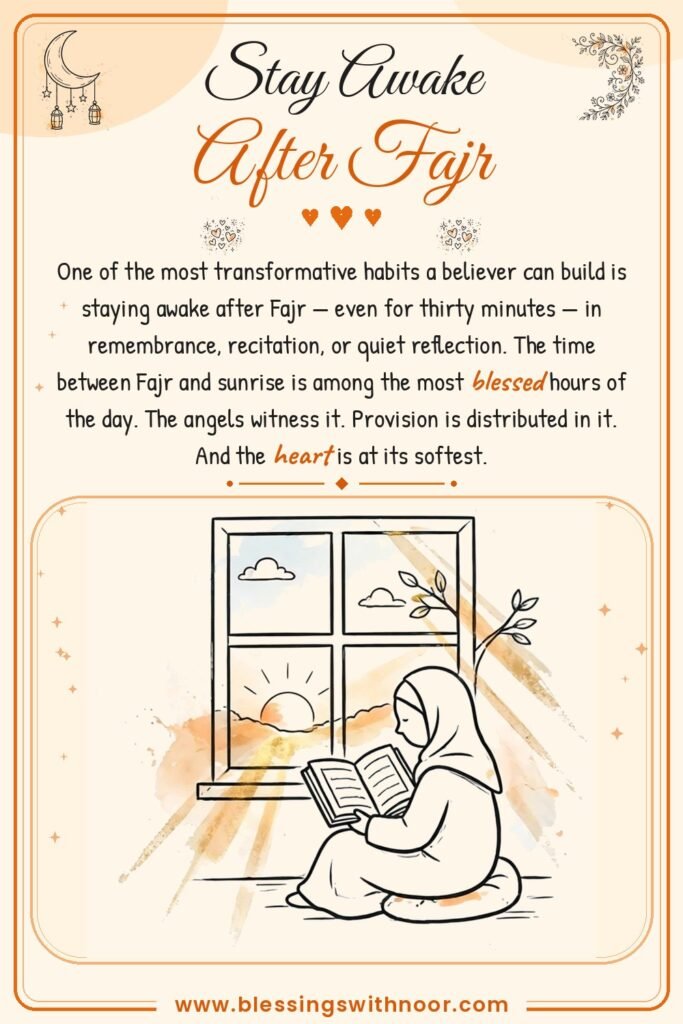
One of the most transformative habits a believer can build is staying awake after Fajr — even for thirty minutes — in remembrance, recitation, or quiet reflection. The time between Fajr and sunrise is among the most blessed hours of the day. The angels witness it. Provision is distributed in it. And the heart is at its softest.
You do not need to do anything grand. Read a page of the Quran with its meaning. Recite your morning adhkar — see our guide to Morning Adhkar: Daily Duas for Protection. Sit with your tasbih and remember Allah. Or simply sit in stillness, watching the sky change color, thanking Allah for another day. The point is not productivity; it is presence.
If staying awake feels impossible at first, start small: ten minutes after Fajr, then twenty, then thirty. Sleep early, keep your phone away from the bed, and make sincere dua at night to be woken for Fajr. Allah helps those who truly want to meet Him at dawn.
Practical: Building Your Fajr Routine
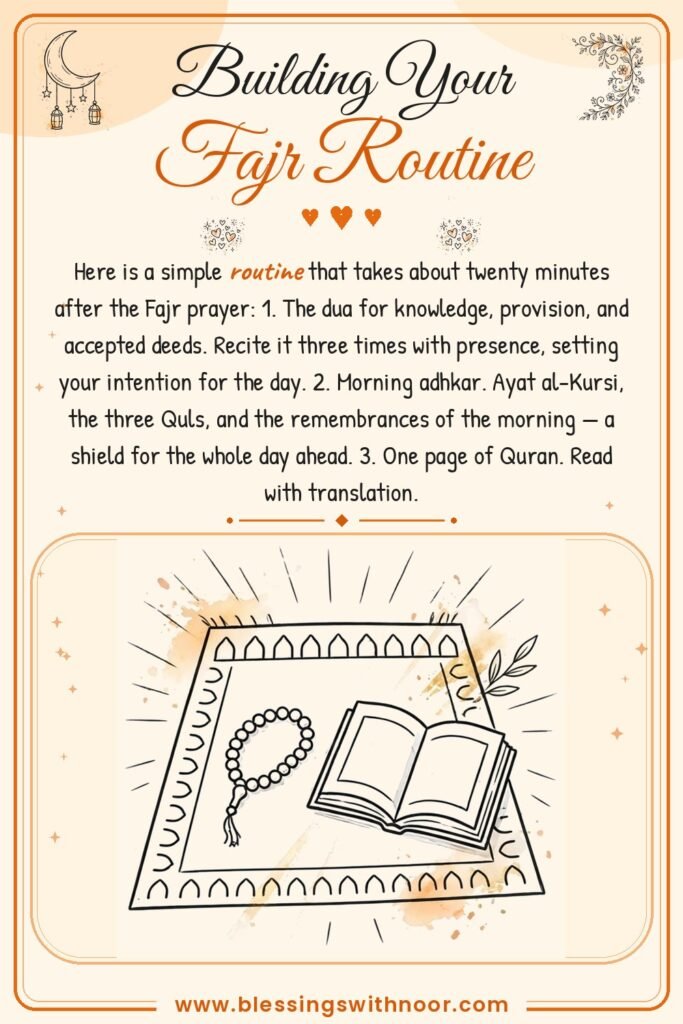
Here is a simple routine that takes about twenty minutes after the Fajr prayer:
1. The dua for knowledge, provision, and accepted deeds. Recite it three times with presence, setting your intention for the day. Pair it with the intention-setting practices in our article on Dua for a Blessed & Productive Day.
2. Morning adhkar. Ayat al-Kursi, the three Quls, and the remembrances of the morning — a shield for the whole day ahead.
3. One page of Quran. Read with translation. One page a day means you complete the Quran in about two years — slowly, deeply, with understanding.
4. Dua for the day ahead. Name the specific things you need today: the meeting, the exam, the difficult conversation, the sick relative. Allah loves to be asked. As He promises in the Quran, “Call upon Me; I will respond to you” (Surah Ghafir, 40:60).
5. Gratitude. Before you stand up, name three blessings. Explore more on this practice in our Morning Duas of Gratitude — and browse all our Morning Prayers for a fuller routine.
When You Miss Fajr: Mercy, Not Despair
Everyone misses Fajr sometimes. When it happens, do not let Shaytan turn one missed prayer into a ruined day. Pray it as soon as you wake, make sincere istighfar, and move forward. The door of mercy does not close because your alarm failed.
Then, gently investigate: did you sleep too late? Was your phone beside your pillow until midnight? Make one small change. The goal is not guilt — it is growth. Allah sees the one who keeps trying, night after night, and He honors that effort in ways we cannot see.

Frequently Asked Questions
What should I recite right after the Fajr prayer? The dua “Allahumma inni as’aluka ‘ilman nafi’an, wa rizqan tayyiban, wa ‘amalan mutaqabbal” (for beneficial knowledge, wholesome provision, and accepted deeds) is a beautiful Sunnah dua for after Fajr, followed by the morning adhkar.
Is it better to sleep after Fajr or stay awake? Staying awake in remembrance until sunrise is highly recommended and carries great reward, but if you must sleep — for work or health — do so after your adhkar, with the intention of rising with energy to serve Allah and your family.
How can I wake up for Fajr consistently? Sleep early, keep your phone away from the bed, set multiple alarms, and ask Allah sincerely at night to wake you. Sincere intention is the strongest alarm of all.
Conclusion: Meet the Day Before It Meets You
The day is coming for you either way — with its emails and errands, its joys and its tests. The only question is whether you will meet it on your knees, in the company of Allah, or let it ambush you while you are still half asleep. Fajr is your head start. It is the quiet victory that makes every other victory of the day possible.
Tomorrow morning, when the sky begins to lighten, rise. Pray. Whisper your duas. And walk into your day carrying the light you asked for — the one who begins with Allah never truly walks alone.