Before the world asks anything of you today, you have already received everything. You woke up. You can breathe, see, move, think. There is food to eat, a roof above you, people who love you. Every single morning is a delivery of a thousand gifts — most of which we never notice, let alone thank Allah for. These morning gratitude duas are about waking up to the gifts: beginning each day with shukr, the beautiful Islamic art of thankfulness that turns blessings into more blessings.
Gratitude in Islam is not a mood — it is a discipline, a daily practice with a divine promise attached: thankfulness increases what you have. Here are the most beautiful morning duas of gratitude, the Quranic promise behind them, and simple practices that will fill your days with contentment.
Why Morning Gratitude Duas Begin the Day Well
The first thoughts of the morning set the direction of the whole day. If you wake up reaching for your phone, your mind fills with other people’s lives, bad news, and demands before you have even stood up. But if you wake up with Alhamdulillah on your tongue, your heart fills first — with awareness of what you already have, before the world tells you what you lack.
Allah links gratitude directly to increase: the one who thanks Him for blessings receives more of them, while ingratitude dries the heart. Morning is the perfect time for shukr because the day’s blessings are fresh — the gift of life renewed, the night’s safety, the new chance to do good. The Prophet (peace be upon him) would begin his mornings remembering these gifts, teaching us that the grateful heart is the happy heart.

The Morning Dua of Gratitude
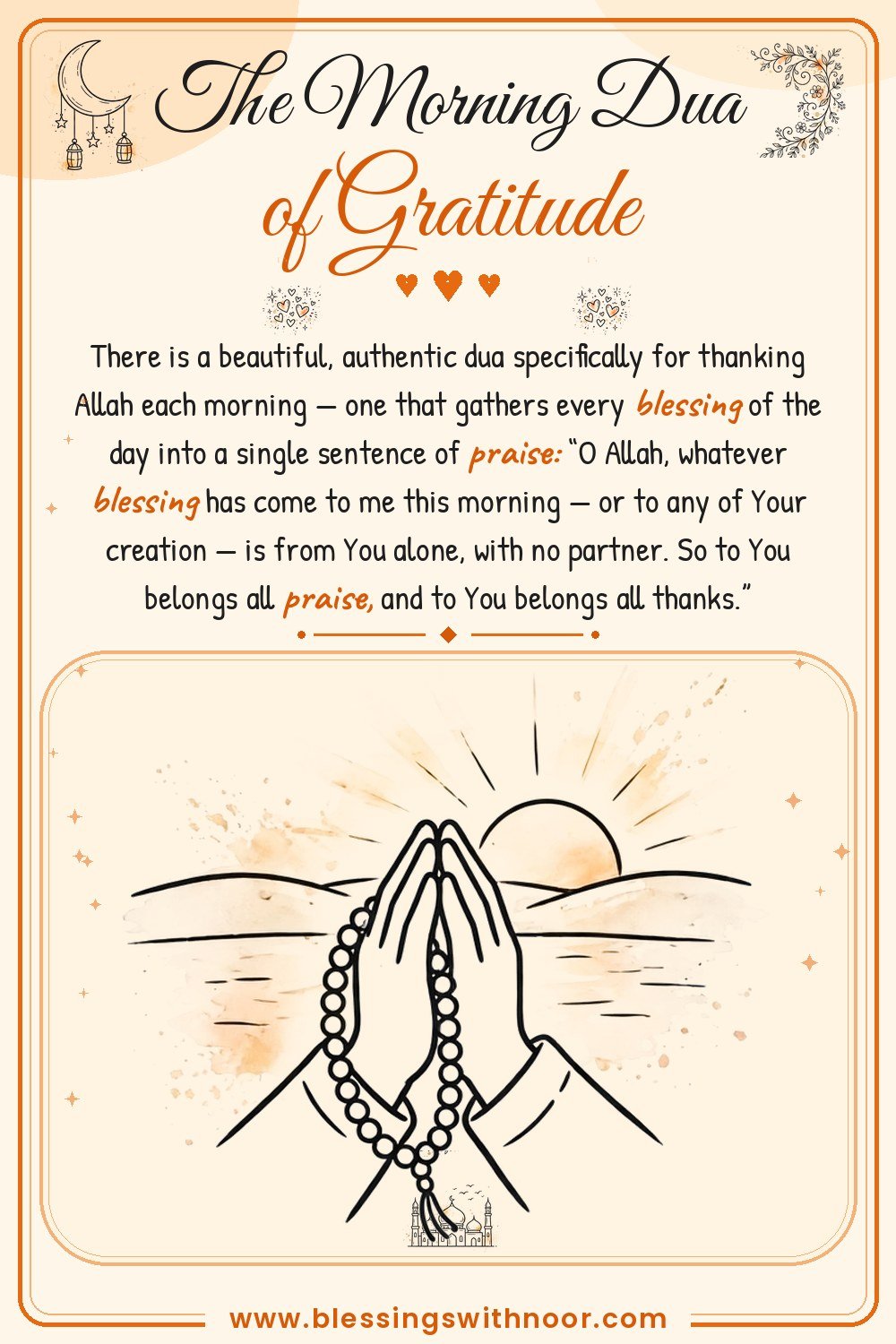
There is a beautiful, authentic dua specifically for thanking Allah each morning — one that gathers every blessing of the day into a single sentence of praise:
اللَّهُمَّ مَا أَصْبَحَ بِي مِنْ نِعْمَةٍ أَوْ بِأَحَدٍ مِنْ خَلْقِكَ فَمِنْكَ وَحْدَكَ لَا شَرِيكَ لَكَ، فَلَكَ الْحَمْدُ وَلَكَ الشُّكْرُ
Allahumma ma asbaha bi min ni’matin aw bi ahadin min khalqika, faminka wahdaka la sharika lak, falakal-hamdu wa lakash-shukr.
“O Allah, whatever blessing has come to me this morning — or to any of Your creation — is from You alone, with no partner. So to You belongs all praise, and to You belongs all thanks.” Read it again slowly. It does not just thank Allah for your blessings — it thanks Him for everyone’s. Your neighbor’s health, the stranger’s provision, the child’s smile: all from Him, all worthy of your gratitude. This is shukr at its widest and most beautiful.
Make this dua part of your dawn routine, right after Fajr or with your morning adhkar. Say it deliberately, not rushed — and as you say “whatever blessing,” let your mind touch the specific blessings of this particular morning: the rest you got, the people under your roof, the work waiting for you.
The Divine Exchange: Remember Me and I Will Remember You
Gratitude in Islam is never one-sided. Allah promises in the Quran: “So remember Me; I will remember you. Be grateful to Me and do not deny Me.” (Surah Al-Baqarah, 2:152). Consider the magnitude of that exchange: you — small, busy, forgetful — remember the Lord of the worlds, and He, in His majesty, remembers you. Your morning shukr is met with divine remembrance.
This verse also pairs remembrance with gratitude inseparably. You cannot truly remember Allah without becoming grateful, and you cannot be truly grateful without remembering Him. They are two sides of one coin — and the morning is when you mint it fresh, every single day. For more on the dawn remembrances that carry this promise, see our Fajr Blessings guide.
A Simple Morning Gratitude Practice
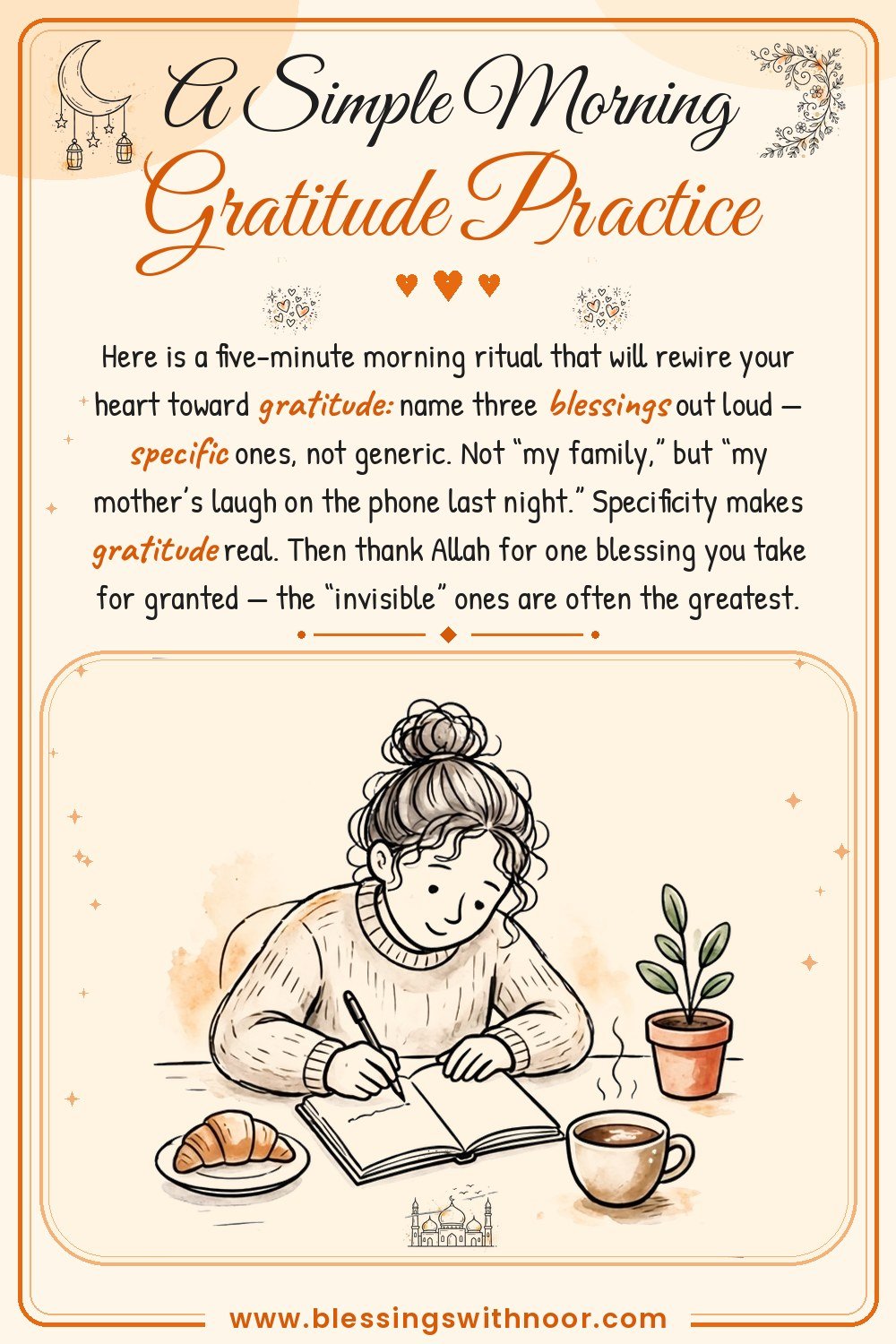
Duas plant the seed; practice waters it. Here is a five-minute morning ritual that will rewire your heart toward gratitude:
1. Three specific blessings. Before you leave your bed, name three blessings out loud — specific ones, not generic. Not “my family,” but “my mother’s laugh on the phone last night.” Specificity makes gratitude real.
2. One blessing you usually ignore. Your eyesight. Clean water. The ability to walk. Each morning, thank Allah for one blessing you take for granted — the “invisible” ones are often the greatest.
3. Gratitude for the difficult. Name one hard thing in your life and find the gift hidden inside it. The illness that taught you patience. The delay that protected you. This is advanced shukr — and it is transformative.
4. Thank a person. Send one message each morning thanking someone — a parent, a friend, a spouse. Gratitude to people is gratitude to Allah, and your message might be the best part of their day.
Gratitude When Life Is Hard
It is easy to say Alhamdulillah when life is sweet. But what about the mornings when you wake up to bad news, pain, or worry? Islamic gratitude is not denial — it does not ask you to pretend hardship is pleasant. It asks you to hold two truths at once: this is difficult, and I am still blessed.
Even on the hardest morning, you can thank Allah for the strength to face it, for the people beside you, for the faith that gives suffering meaning, and for the promise that hardship is always followed by ease. The believers who practiced shukr in difficulty describe the same discovery: gratitude does not remove the pain, but it removes the despair — and that changes everything.
If you are going through a hard season, keep your gratitude practice even smaller: one blessing, whispered. Allah sees the one who thanks Him through tears, and He honors that courage.

Sharing Gratitude: Teach It, Spread It
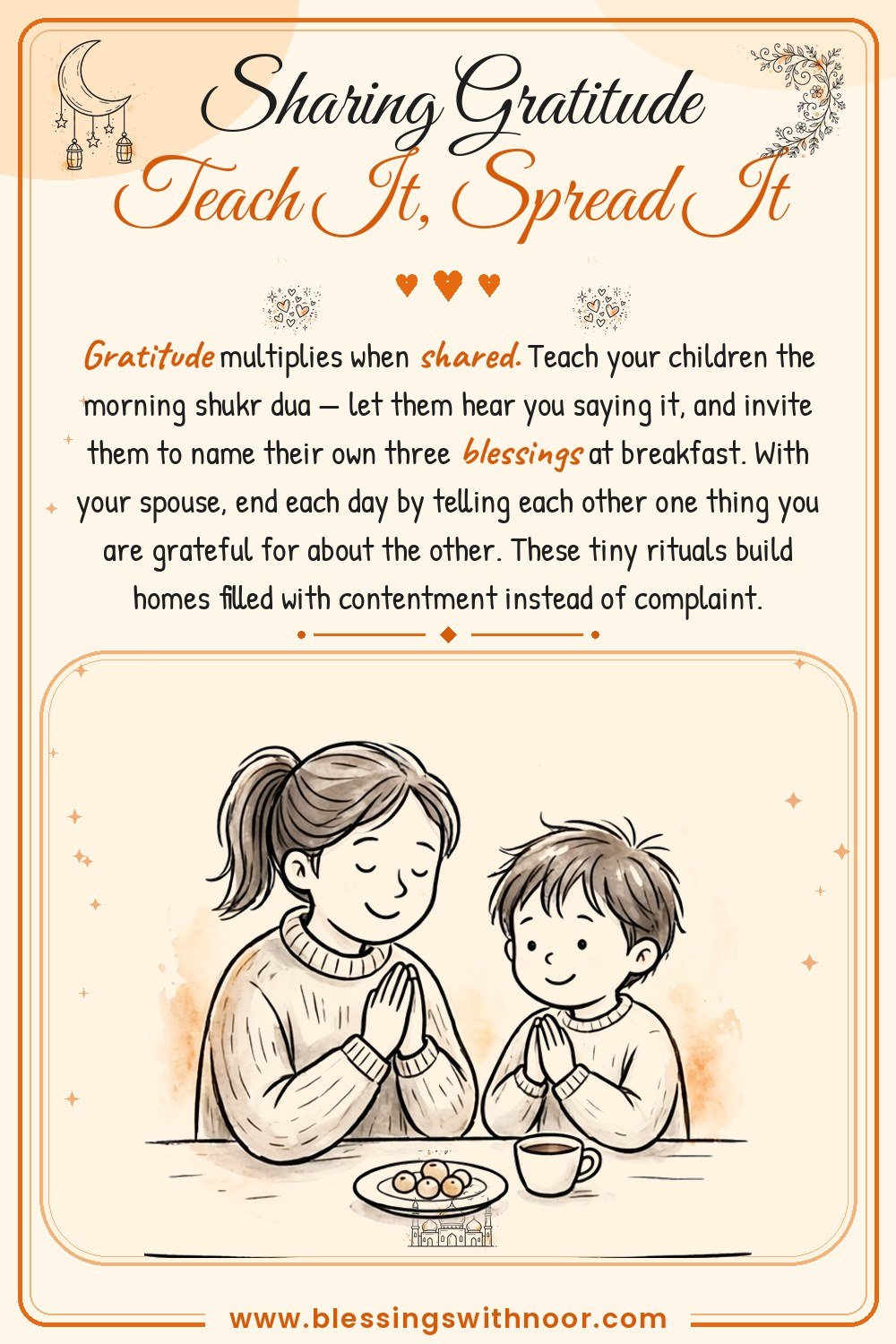
Gratitude multiplies when shared. Teach your children the morning shukr dua — let them hear you saying it, and invite them to name their own three blessings at breakfast. With your spouse, end each day by telling each other one thing you are grateful for about the other. These tiny rituals build homes filled with contentment instead of complaint.
You can also share gratitude publicly: a morning message to a friend beginning with Alhamdulillah, a social media post thanking Allah for a specific blessing, a note of thanks to someone who helped you. In a world drowning in complaints, a grateful voice is a light. Browse our full Morning Prayers collection for more dawn practices to share with those you love.
Frequently Asked Questions
What is the best morning dua for gratitude? “Allahumma ma asbaha bi min ni’matin…” — “O Allah, whatever blessing has come to me this morning is from You alone” — is the most beautiful authentic morning dua of thanks.
How does gratitude increase blessings in Islam? Allah promises that thankfulness brings increase — grateful hearts notice blessings, use them well, and earn Allah’s pleasure, which opens the doors to more. Ingratitude does the opposite.
Can I be grateful and still ask Allah for more? Yes — gratitude and asking are not opposites. Thank Allah for what you have, then ask Him for what you need. The most beloved duas combine both: praise first, request after.
Conclusion: The Grateful Morning
Every morning, before the demands begin, you stand at a crossroads: complain about what is missing, or thank Allah for what is present. Choose shukr — and watch how the day changes color.
Tomorrow, when you open your eyes, let your first word be Alhamdulillah. Mean it. Feel it. And carry that gratitude through every hour, until you fall asleep thanking Allah for a day well lived.