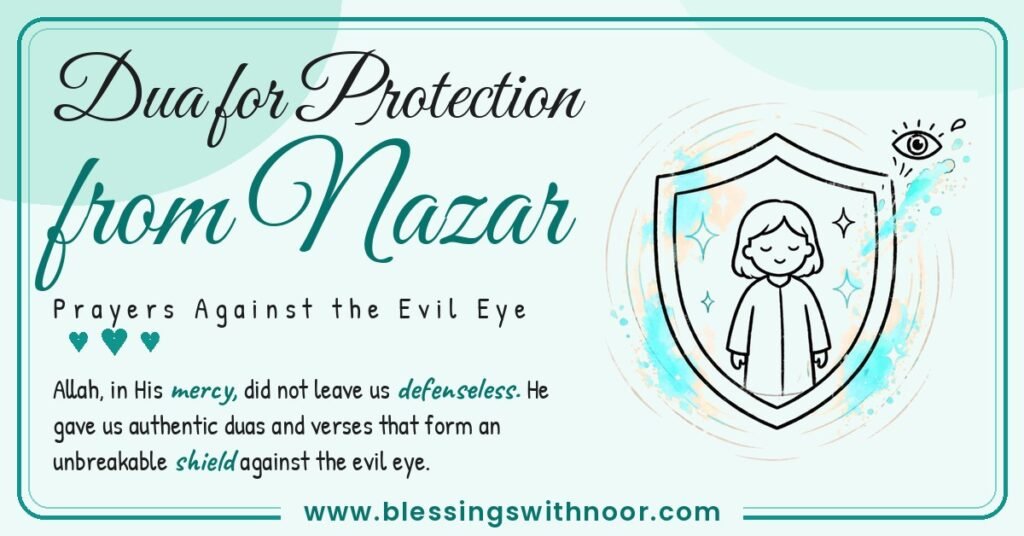
You have felt it before — that quiet unease after someone admires your new baby a little too intensely, or praises your success a little too eagerly, and then misfortune seems to follow. In Islam, this is not superstition. The evil eye — nazar or al-‘ayn — is a reality the Prophet Muhammad (peace be upon him) confirmed when he said, “The evil eye is real.” It is the harm that can befall a person, their health, their wealth, or their children through the envious or admiring gaze of another, even when the one looking bears no ill intention. But Allah, in His mercy, did not leave us defenseless. He gave us authentic duas and verses that form an unbreakable shield against the evil eye — and this article gathers them for you.
Understanding the evil eye is not about living in fear; it is about living in faith. The same Allah who warned us of this harm taught us exactly how to guard against it. Let us learn the protection He provided, so we can walk through life with calm hearts and protected blessings.
What Is the Evil Eye in Islam?
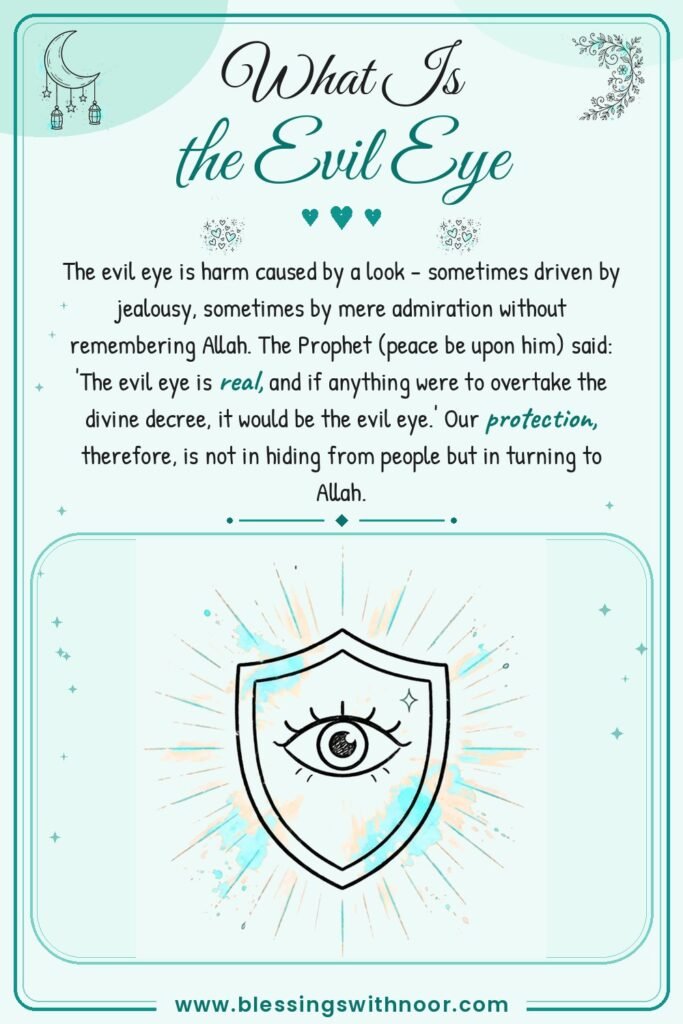
The evil eye is harm caused by a look — sometimes driven by jealousy, sometimes by mere admiration without remembering Allah. The Prophet (peace be upon him) said: “The evil eye is real, and if anything were to overtake the divine decree, it would be the evil eye.” This is a sobering statement: it shows us that the evil eye has genuine effect, while reminding us that nothing happens outside Allah’s decree. Our protection, therefore, is not in hiding from people but in turning to Allah.
Importantly, the evil eye can come even from those who love us — a parent marveling at their child, a friend praising our home — when they forget to say “Masha’Allah” or “Barakallahu feek”. This is why the Sunnah teaches us to bless what we admire: saying “Masha’Allah, la quwwata illa billah” when we see something beautiful protects the person we admire from our own gaze. It is an act of love, not just caution.
Living With Awareness of Nazar, Without Living in Fear
For many Muslims, belief in nazar is learned long before it is studied. A grandmother recites over a newborn before visitors hold the baby. A family says “Masha’Allah” automatically when a child scores well, a business opens, or a new home is shown. These habits reflect a belief held in Islam: that admiration or envy, even without deliberate malice in some cases, can be connected to real harm, and that ultimate protection rests with Allah alone.
Holding that belief well takes balance, and this is where thoughtful readers often have questions. On one side, dismissing nazar entirely ignores what the Prophet (peace be upon him) taught about its reality. On the other side, blaming every disappointment on someone’s gaze can damage relationships and peace of mind. A job not offered, an illness with a clear medical cause, a plan that simply did not work out — not everything unwelcome is the evil eye, and Islam encourages you to take practical means, seek proper treatment, and avoid suspicion of specific people without evidence.
A healthier posture looks like this: you protect yourself consistently, you bless what you admire in others, and you leave the unseen details to Allah. When you praise a friend’s child, adding a prayer for blessing guards both their family and your own heart. When you share good news about yourself, sharing it with gratitude and a measure of discretion — rather than display — keeps joy from curdling into showing off. And when difficulty does come, your first response is the one described in the next sections: return to the words of protection Allah has already given, review whether your daily remembrances have slipped, and carry on with your responsibilities rather than hunting for who might have looked at you wrongly.
Seen this way, concern about nazar does not shrink your life. Done properly, it makes you more prayerful, more careful with other people’s blessings, and less anxious — because the emphasis falls on Who protects, not on who might harm.
It also helps to understand why children and visible blessings are mentioned so often in this context. A healthy baby, a beautiful home, a public success — these are joys that naturally draw attention, and attention is the setting in which admiration can turn, knowingly or unknowingly, toward envy. That is not a reason to hide every happiness or refuse every compliment. It is a reason to develop the reflexes this article teaches: return praise to Allah, bless the person in front of you, keep your protective recitations consistent, and teach your household the same reflexes early, so gratitude becomes your family’s lasting culture rather than fear of other people’s eyes and their passing opinions.
Signs and the Islamic Response
Scholars mention that sudden, unexplained misfortune — a healthy child falling ill, a thriving business declining, persistent bad luck after a moment of public admiration — may be signs of the evil eye, though we should never jump to conclusions or accuse anyone. The Islamic response is never blame, suspicion, or visiting fortune-tellers. It is always the same: turn to Allah, recite the protective verses and duas, and trust in Him.
If you suspect the evil eye, increase your recitation of the protective surahs, make ruqyah (Quranic healing recitation) over yourself or the affected person, and keep your morning and evening adhkar firmly in place. Allah says: “And We send down of the Quran that which is healing and mercy for the believers” — the Quran itself is our cure. You may also ask a righteous person to make dua for you, for the dua of a sincere believer for his brother in his absence is surely answered. Our article on Ayat al-Kursi and protection duas goes deeper into the verses that form this shield.
The Protective Duas Against the Evil Eye
1. The dua of the Prophet for his grandsons:
أُعِيذُكَ بِكَلِمَاتِ اللَّهِ التَّامَّةِ مِنْ كُلِّ شَيْطَانٍ وَهَامَّةٍ وَمِنْ كُلِّ عَيْنٍ لَامَّةٍ
U’idhuka bikalimatillahi at-tammati min kulli shaytanin wa hammatin, wa min kulli ‘aynin lammah
“I seek protection for you in the perfect words of Allah from every devil and poisonous creature, and from every harmful eye.” The Prophet (peace be upon him) used these very words for Hasan and Husayn. Say it over your children, your loved ones, and yourself.
2. أَعُوذُ بِكَلِمَاتِ اللَّهِ التَّامَّاتِ مِنْ شَرِّ مَا خَلَقَ
A’udhu bikalimatillah at-tammati min sharri ma khalaq (three times, morning and evening)
“I seek refuge in the perfect words of Allah from the evil of what He has created.” The Prophet (peace be upon him) said nothing will harm the one who says this.
3. The last two surahs — Al-Falaq and An-Nas:
These are the ultimate refuge. Surah Al-Falaq specifically asks protection “from the evil of the envier when he envies” — the exact harm of the evil eye. Recite them three times each morning and evening, and whenever you feel uneasy. The Prophet (peace be upon him) called them sufficient protection from every harm.
4. Ayat al-Kursi (Quran 2:255):
The greatest verse of the Quran, a fortress against all evil including the evil eye. Recite it over yourself, your children, and your home.
How to Protect Yourself and Your Family Daily
Say “Masha’Allah” and “Barakallahu feek” often. When you admire something — your own child, a friend’s success, a beautiful home — bless it. This is both Sunnah and kindness.
Keep the morning and evening adhkar. The daily protective remembrances are your standing guard. Our guide to morning and evening adhkar walks you through the full routine.
Recite over your children before sleep. Cup your hands, recite the three Quls, and wipe over them — the Prophet’s (peace be upon him) own practice with his family.
Do not broadcast every blessing. The Prophet Ya’qub (peace be upon him) advised his son Yusuf not to share his dream with his brothers, fearing envy. Share your joys wisely, and always with gratitude to Allah rather than boastfulness.
Give charity. Charity extinguishes Allah’s anger and averts calamity. Regular giving is a quiet, powerful protection for your whole household.

For the full morning routine that surrounds these duas, follow our step-by-step guide to morning adhkar: daily duas for protection.
Blessings Against the Evil Eye to Share
Send these to someone you love, or say them over your family:
“May Allah protect you from every envious eye and every hidden harm. May His light surround you and His angels guard you always. Ameen.”
“A’udhu bikalimatillah — I place you under the protection of Allah’s perfect words. May no evil eye ever touch you or your blessings. Ameen.”
For the full collection of protective supplications, visit our Protection Prayers category.
For a broader shield beyond nazar alone, keep a general prayer for protection and safety saved for travel, illness, and uncertain days.
A Calm Daily Routine for Protection at Home
Think of protection as layers you repeat until they become automatic. In the morning, after Fajr, recite the short refuge duas listed above and the final chapters of the Quran as taught for morning protection, before phones and news pull your attention elsewhere. In the evening, repeat them as the day closes — many families do this together while dinner is being cleared or children are settling, so younger ones learn the words by hearing them nightly.
You can also build a complete twice-daily habit with our morning and evening adhkar for daily protection collection.
For children specifically, keep the bedtime moment gentle and unhurried. Recite over them, blow lightly as taught in the Sunnah practice described earlier on this page, and wipe your hands over them before they sleep. If you post photos of family milestones, pause first: consider who truly needs to see them, say your own words of blessing over what Allah has given you, and remember that not every blessing needs an audience to be enjoyed. Finally, if anxiety about nazar itself starts to dominate your thoughts, increase remembrance and charity as this article suggests, and speak to a trusted scholar or counselor — protection in Islam is meant to produce tranquility, not obsession.
If your main concern is your little ones, read next our dedicated powerful dua for the protection of your children with supplications written just for them.
Keep the routine visible but low-key: a small printed card of the morning duas by the front door or bathroom mirror helps guests, older children, and forgetful adults alike. What matters is not elaborate ritual, but returning to Allah’s words morning and evening until protection feels like breathing — regular, calm, and unforced.
Frequently Asked Questions
Can the evil eye affect me even if I pray regularly?
Everyone can be affected, but regular prayer, adhkar, and Quran recitation build a strong shield that greatly reduces its harm. Protection is a practice, not a one-time event.
Should I wear amulets or charms against the evil eye?
Islamic scholars discourage amulets and charms, especially those with unknown inscriptions. The Sunnah’s protection is dua, Quran, and trust in Allah — that is the pure and sufficient path.
What if I think I gave someone the evil eye unintentionally?
Make dua for them immediately, say “Barakallahu feek” for what you admired, and ask Allah to bless them. The remedy is blessing, not guilt.
Conclusion: Protected by the Perfect Words of Allah
The evil eye is real, but our Lord is greater than every harm. He has given us His perfect words as a refuge — the Quls, Ayat al-Kursi, and the beautiful duas of His Prophet (peace be upon him). Walk through this world with dignity and trust, knowing you are guarded. Do not live in fear of the gaze of people; live in the remembrance of the One who sees all and protects all. Keep your morning and evening adhkar, bless what you admire, recite over your children, and trust in Allah’s decree. May Allah shield you and your loved ones from every envious eye, every hidden harm, and every whisper of evil — and may your blessings grow under His protection, untouched and ever-increasing. Ameen.